
GRAIN
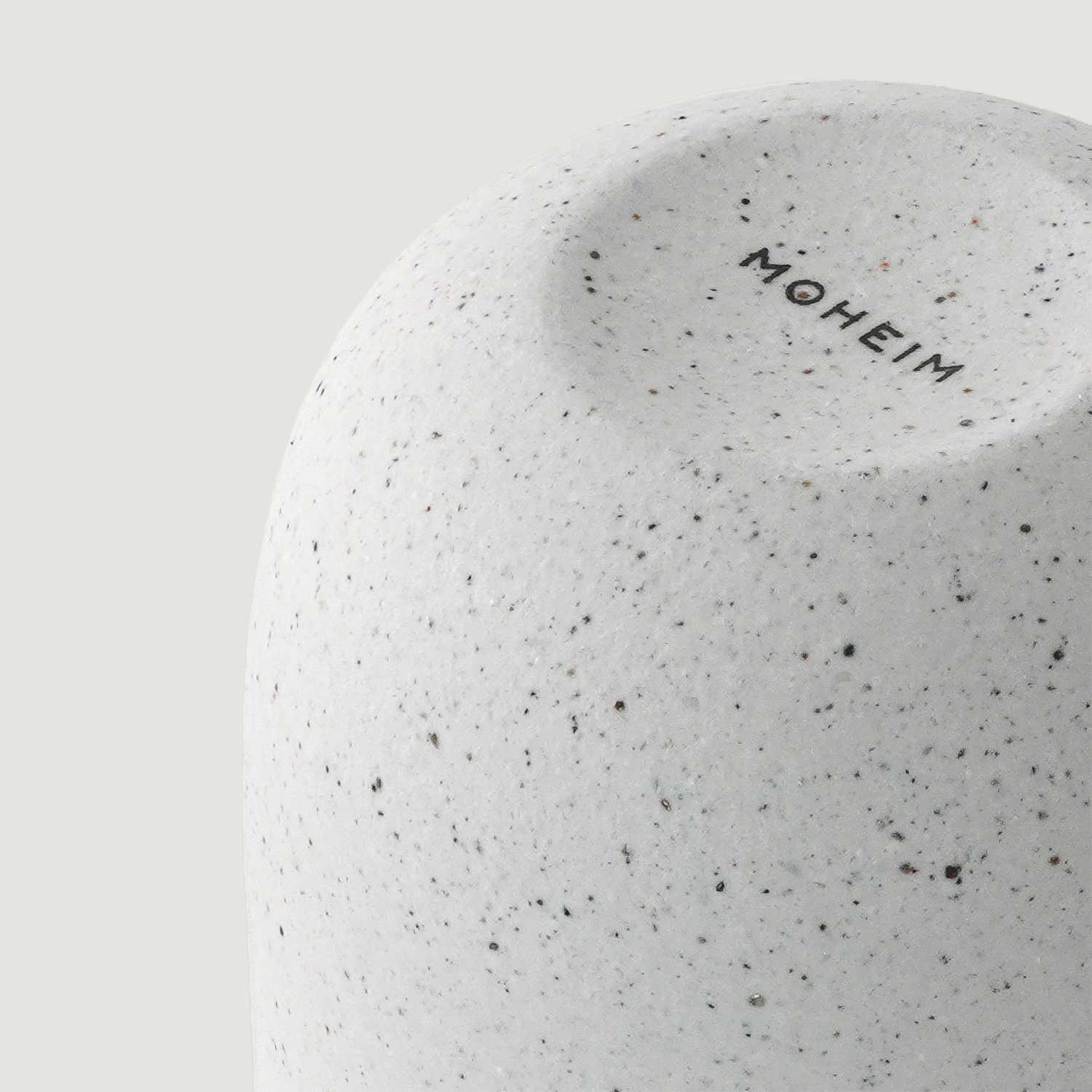
The name comes from the countless "grains" scattered across the surface.
Holding it in your hands, the soft curves born from a craftsman’s touch
bring a comforting warmth to your palm.
This tactile texture—offering warmth and comfort
through the unique feel of the clay and its subtle grain—
is made possible by using recycled clay, created by coarsely crushing
unused Mino ware, a traditional Japanese ceramic, and blending it back into the soil.

“GRAIN” is a tableware series designed to savor the raw texture of clay, the subtle speckles on the surface, and the rich, unique feel and character of each piece.
Giving the series its name, GRAIN, countless tiny grains of blue, brown, and black appear on the white clay, lending a unique personality and a warm, inviting hue to every piece.
Crafted from recycled clay—made by coarsely crushing discarded Mino ware, a traditional Japanese ceramic—this collection charms with its unglazed texture and the gentle curves created by craftsmen’s hands.
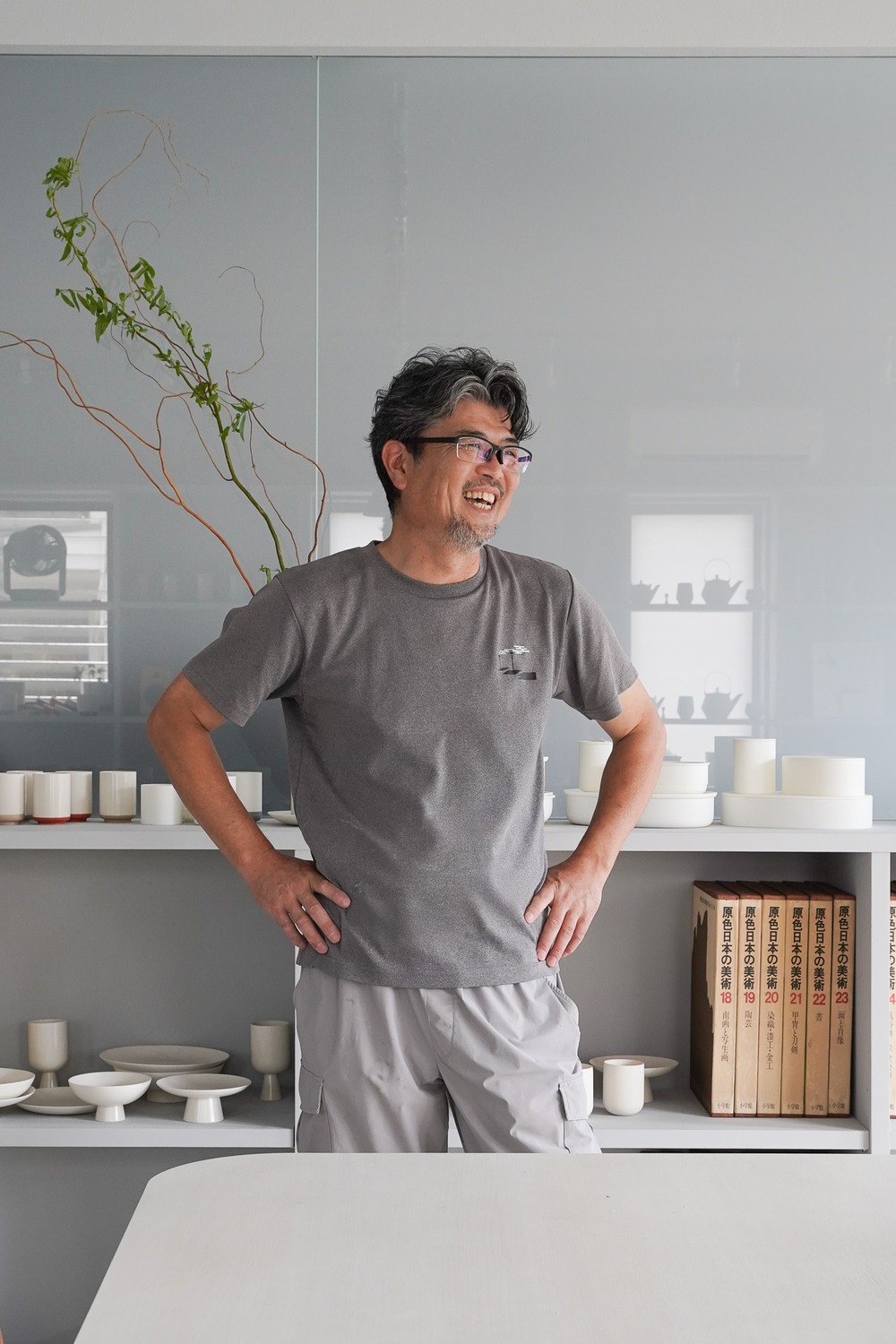
We sat down for a conversation with Masayoshi Tsuchimoto, President of the manufacturer Shinzan Kiln Yamatsu, and Shigeichiro Takeuchi, Creative Director of MOHEIM.
Discover the STORY behind the creation of this collection.
PRODUCT STORY Vol.18
—— Could you tell us what initially sparked the development of GRAIN?
Takeuchi
A few years back, we were looking into ways to create new products out of recycled materials made from factory-second STONEWARE. To explore that possibility, we reached out to Shinzan Kiln Yamatsu, a manufacturer with deep roots in Gifu Prefecture’s Tono area—famous for Mino ware, a traditional Japanese ceramic—and began developing concepts together.
Although regulatory hurdles like recycling laws mean we haven’t been able to achieve a STONEWARE-based material yet, we stayed committed to the idea of “doing what we can with what’s available.” That’s why we turned our focus to making tableware from recycled clay mixed with discarded Mino ceramics.
—— Shinzan Kiln Yamatsu has a long history as a Mino ware kiln, doesn’t it?
Tsuchimoto
In the Tono region of Gifu Prefecture (Tajimi, Toki, and Mizunami cities), famous for Mino ware, pottery culture has thrived for over 1,400 years, dating back to around the 7th century. Our kiln, Shinzan Kiln Yamatsu, has nearly 160 years of history since its founding. While the previous generation officially established our founding year as 1868 (the first year of the Meiji period), we were already making pottery using shared kilns before that, so our actual history is likely even longer.
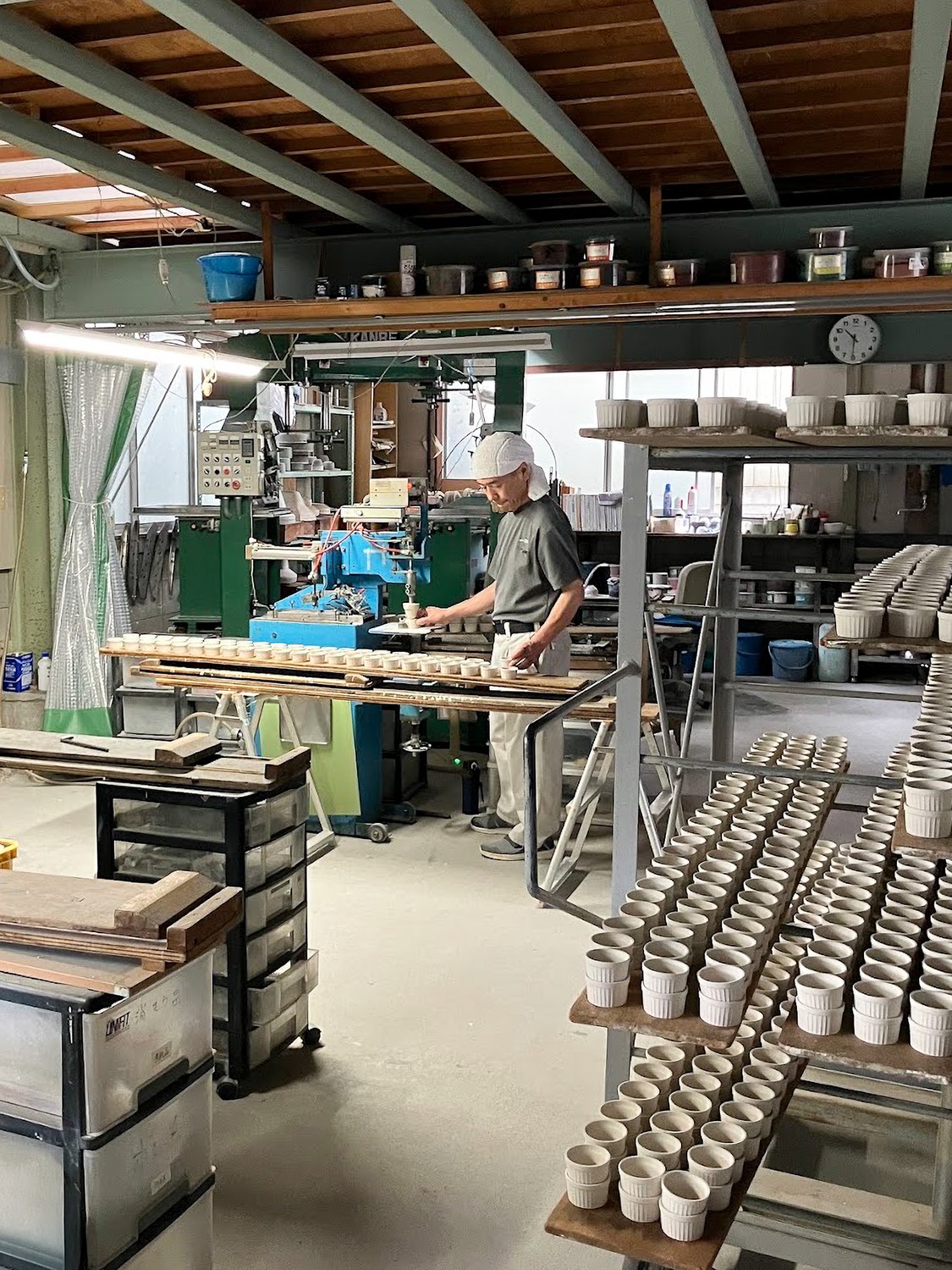
Our main product line used to be Sencha (green tea) teacups, and at our peak, we produced around 2,500 to 3,000 OEM pieces per day. After the Japanese economic bubble burst, there was a time when we searched for ways to keep the kiln alive. About 15 years ago, through a local association matching program, we began collaborating with designers. That led to developing our own original brand products, bringing us to where we are today.
—— We heard there is also a compelling story behind the recycled clay used for the GRAIN series.
Tsuchimoto
Recycled clay was actually developed in the Mino region about 20 years ago (around the 2000s).
The reason pottery making has continued here for 1,400 years is that we’ve been blessed with both high-quality pottery clay and plenty of timber for fuel. However, concerns began to emerge that the clay harvested from Mino’s mountains might eventually run out. This prompted us to ask ourselves: “Should we really take this abundance of clay for granted?” That question became the catalyst for developing recycled clay.
Opening a new clay mine is extremely difficult due to environmental assessments and regulation. Through our recycled clay initiative, we also want people to realize just how miraculous it is that high-quality clay can be harvested here in Mino in the first place.
Takeuchi
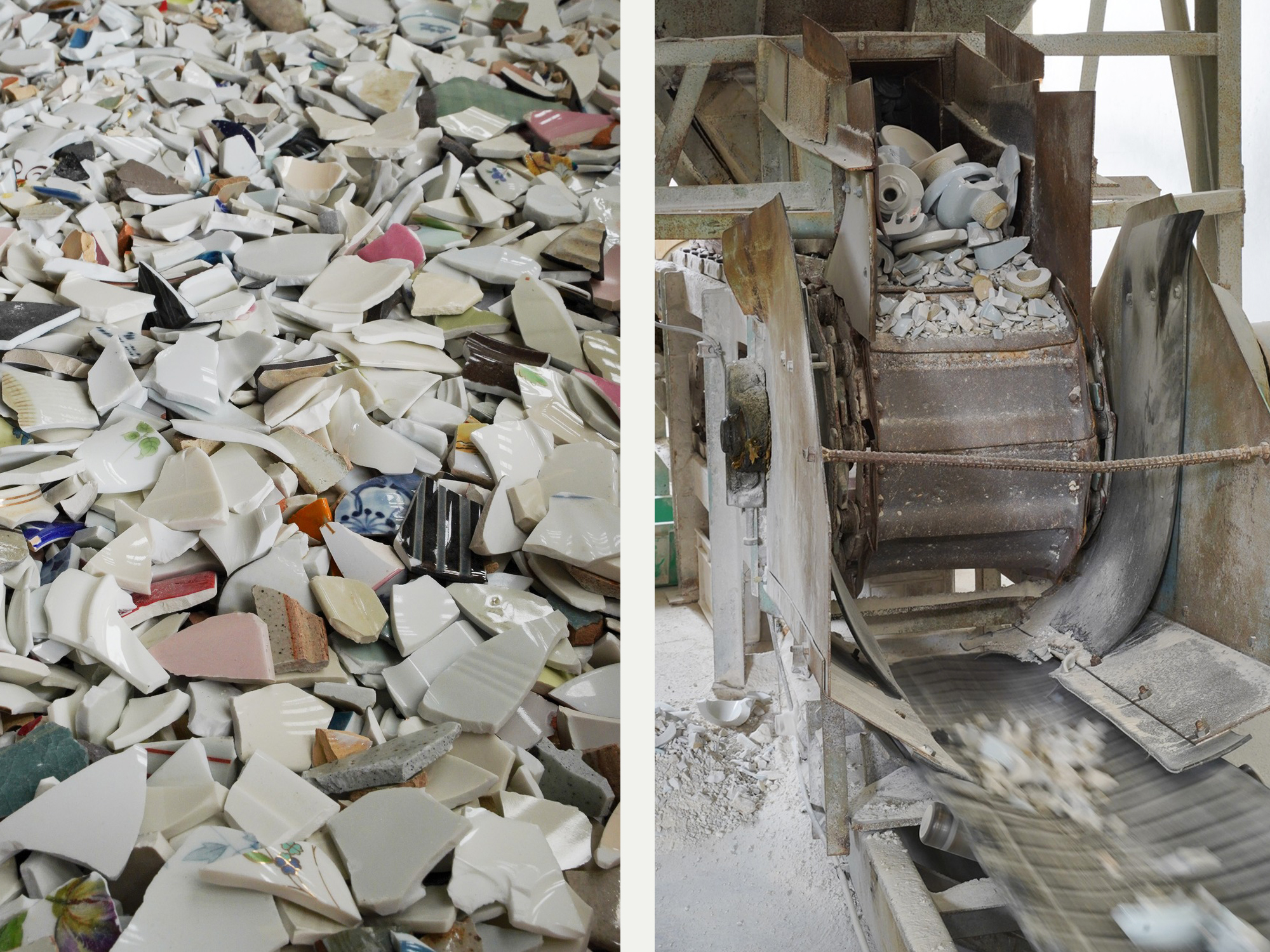
Mino’s recycled clay is made by finely crushing discarded tableware from local homes and factories, as well as non-standard ceramic pieces from the production process, and mixing them back into new raw clay. By using recycled clay, we can reduce the consumption of freshly mined natural clay.
Also, once ceramics are fired at high temperatures, they don’t break down naturally and won’t return to the soil—even though they aren’t harmful to the environment. Discarded ceramics usually end up in landfills, so reusing them as raw material directly helps reduce waste.
—— What sets the recycled clay used in GRAIN apart from the standard type?
Tsuchimoto
Generally, standard recycled clay is made by crushing ceramics down to about 20 microns (μm). Because it’s ground so finely, no visible particles show up on the surface. For GRAIN, however, we specifically exclude earthenware like clay pots and glassy ceramics, and deliberately crush the recycled ceramics more coarsely—to under 0.5 millimeters—before mixing them in. By doing this, the recycled ceramic pieces emerge on the surface as distinct grains, creating a unique texture and rich feel.
Takeuchi
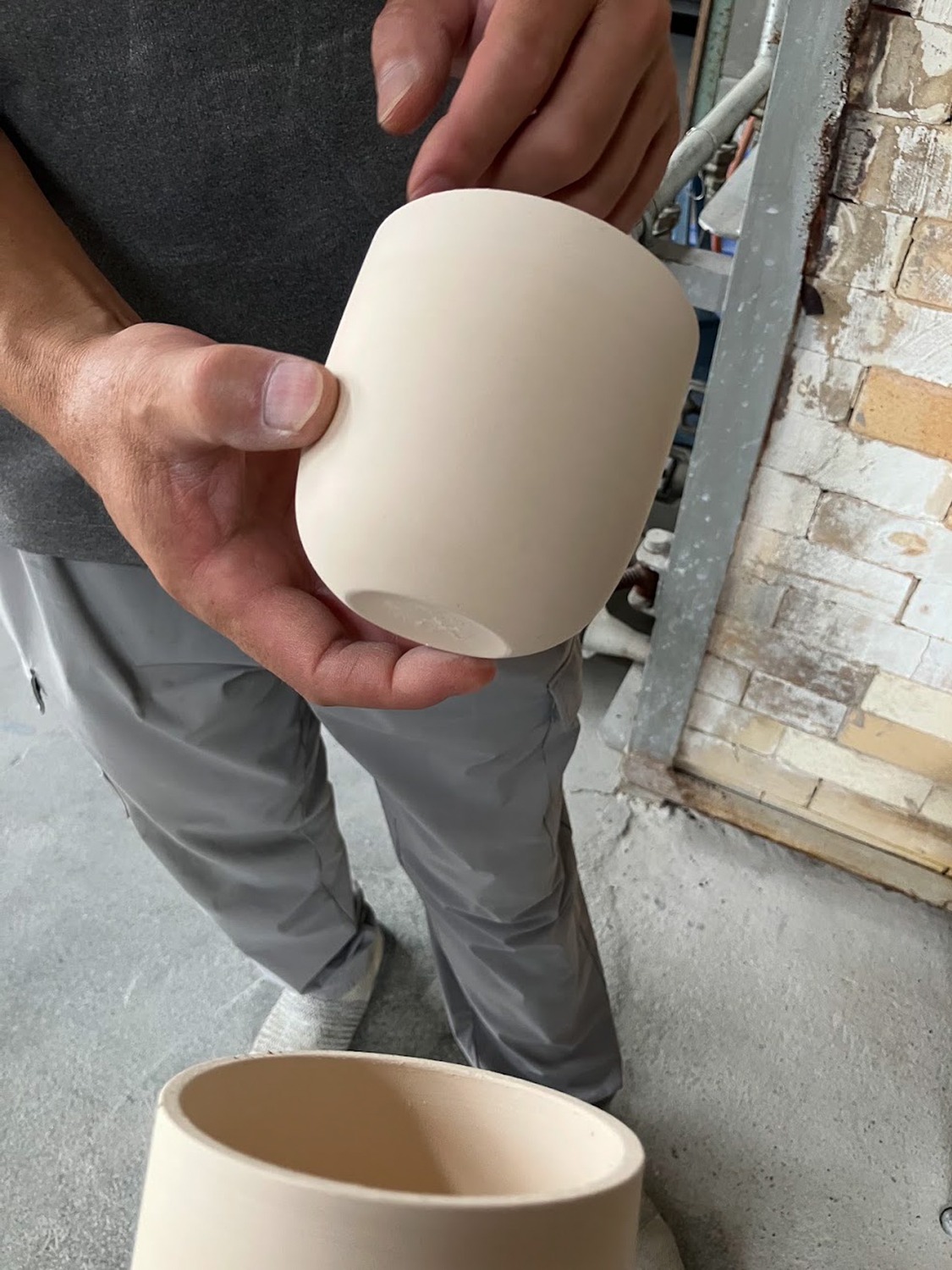
What amazed me when I toured the studio was that in the raw, unfired clay, those crushed particles are completely invisible. They only surface once the piece goes through the kiln. That element of “you won’t know what pattern of grains appears until it’s fired” gives each GRAIN piece its own distinct character—and that unpredictability is what makes it so fascinating.
Tsuchimoto
By the way, those black, blue, and brownish grains you see on the surface actually come from the glaze layers of the original ceramics. But when you look at the total composition of the recycled clay, that glaze layer makes up less than 10 percent. Because the colors are so intense, they really stand out.
Takeuchi
When you consider the ratio of recycled clay being used, you might expect the grains to be subtle or barely noticeable. But instead, they appear beautifully scattered across the surface, giving GRAIN its very own unique expression.
—— How is the GRAIN series manufactured using this recycled clay?
Tsuchimoto
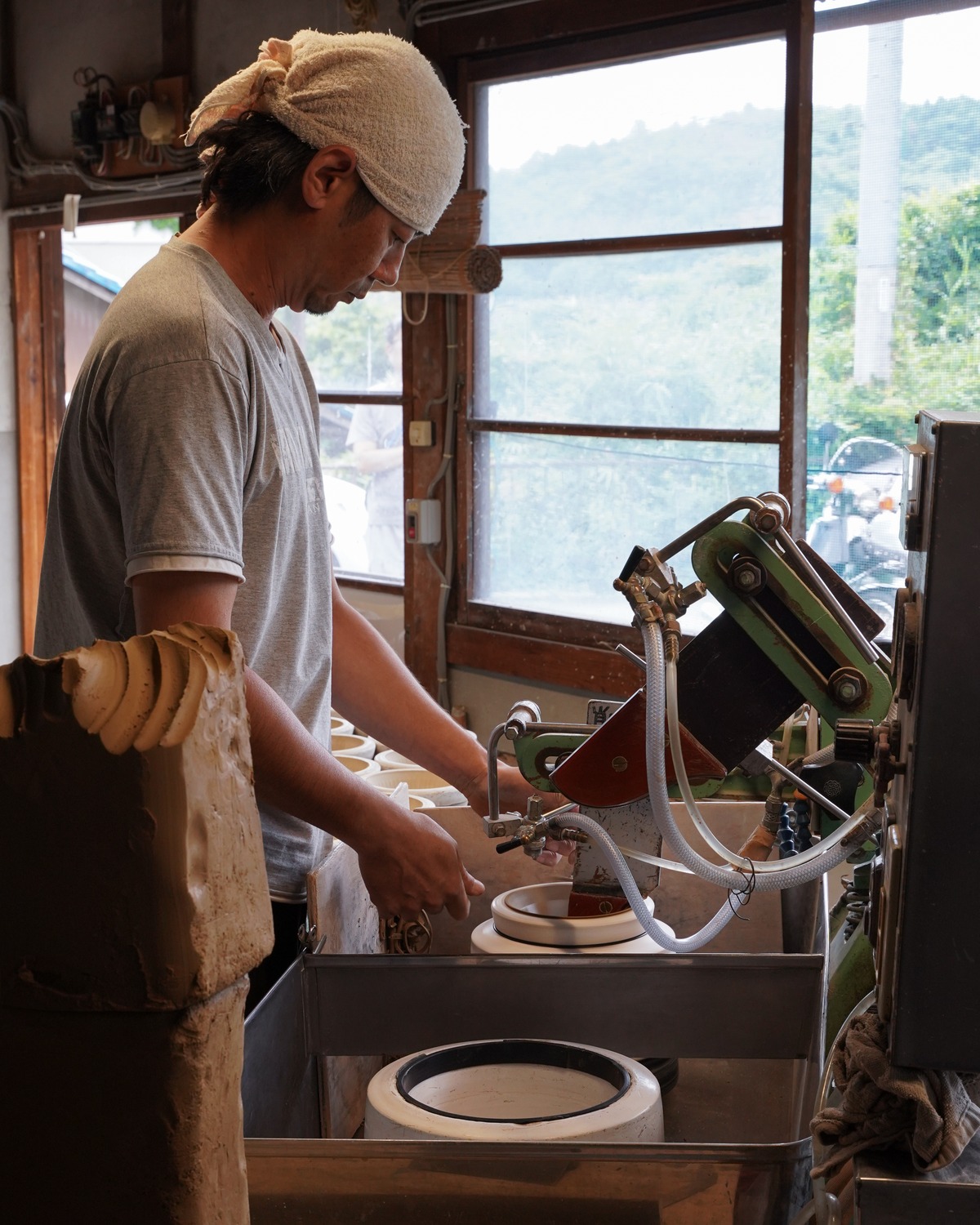
Recycled clay mixed with ceramics crushed to under 0.3mm allows for automated power molding. However, for the recycled clay we use in GRAIN, it has to be made using an older technique called “Mizugote (wet-jiggering).”
Takeuchi
In the wet-jiggering technique, clay is placed into a rotating plaster mold, and a metallic tool called a mizugote (wet jigger) is pressed against it to shape the piece. Even though it uses machinery and molds, I learned that it’s not something just anyone can do. It’s a forming technique that requires true craftsman skill—knowing exactly how much clay to place in the mold, adjusting the amount of water, and getting the subtle pressure on the tool just right.
Tsuchimoto
By choosing this specific technique for the GRAIN series, our hope is to showcase a level of craftsmanship that we are truly proud of within the Mino ceramic community. We want people to appreciate the inherent value of every single item brought to life by master craftsmen. It’s not just about the origin or the materials; highlighting these time-honored techniques is crucial for nurturing successors and keeping the heritage alive.
Takeuchi
When we began mass-producing the first lot, I wondered if they might differ from the early prototypes we created. However, the wet-jiggering craftsman demonstrated such remarkable skill that the finished products matched the samples almost perfectly. Yet, in a truly positive sense, each item carries those gentle organic variations and unique personality that only handcrafting can produce—a quality that adds so much depth and warmth to the GRAIN series.
—— Were there any challenges or difficulties during the development and manufacturing process?
Takeuchi
With GRAIN, we applied a clear glaze to the interior to protect against stains and discoloration. But for the exterior—the surface you hold in your hands—we insisted on an unglazed finish. We really wanted users to directly experience the signature grain texture and the unrefined, tactile warmth of raw clay.
Tsuchimoto
Until now, we had only ever produced tableware with a glazed finish when using recycled clay. Since GRAIN leaves the exterior unglazed, it was our first time trying this, and it came with its share of hurdles.
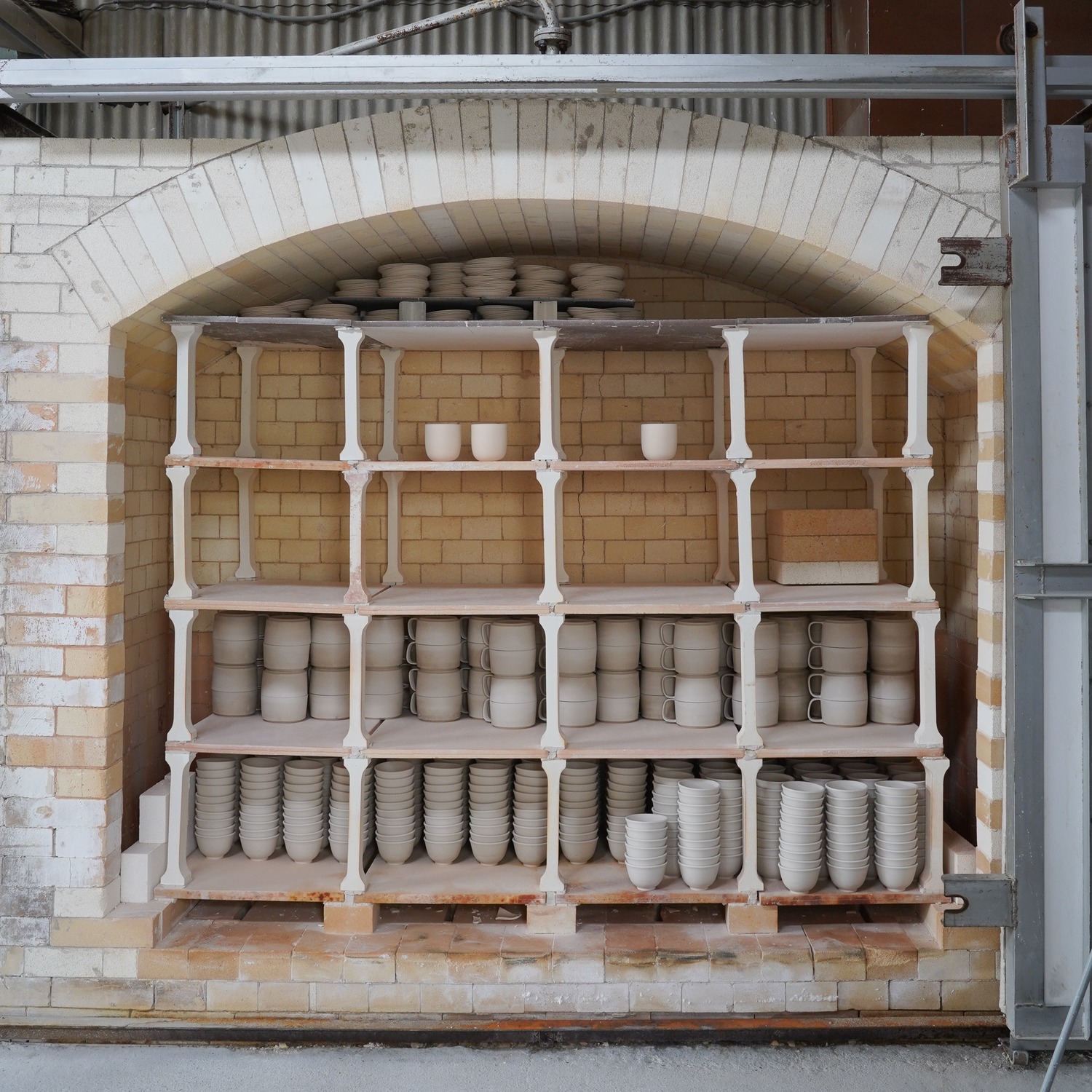
Particularly with the handles on the MUG, we add a bit of clay to create a smooth, gentle curve where the handle joins the body. However, that seam area left a subtle visible line. To solve this, after the pieces are formed using the wet-jiggering technique and go through a primary firing at our kiln, we manually sand down the area where the extra clay was added. Only after putting in this extra step do we proceed to the final firing.
Takeuchi
Hearing your story really reinforces the fact that even a detail as simple as a MUG handle simply couldn’t exist without craftsman skill.
—— In closing, what do you think makes the GRAIN collection so special?
Tsuchimoto
Compared to MOHEIM’s popular STONEWARE collection, GRAIN turned out to have a completely different presence. Working together with Takeuchi-san from the moment he submitted the initial design drawings, I truly came to realize how well he translated the unique ambiance of this material into GRAIN’s forms.
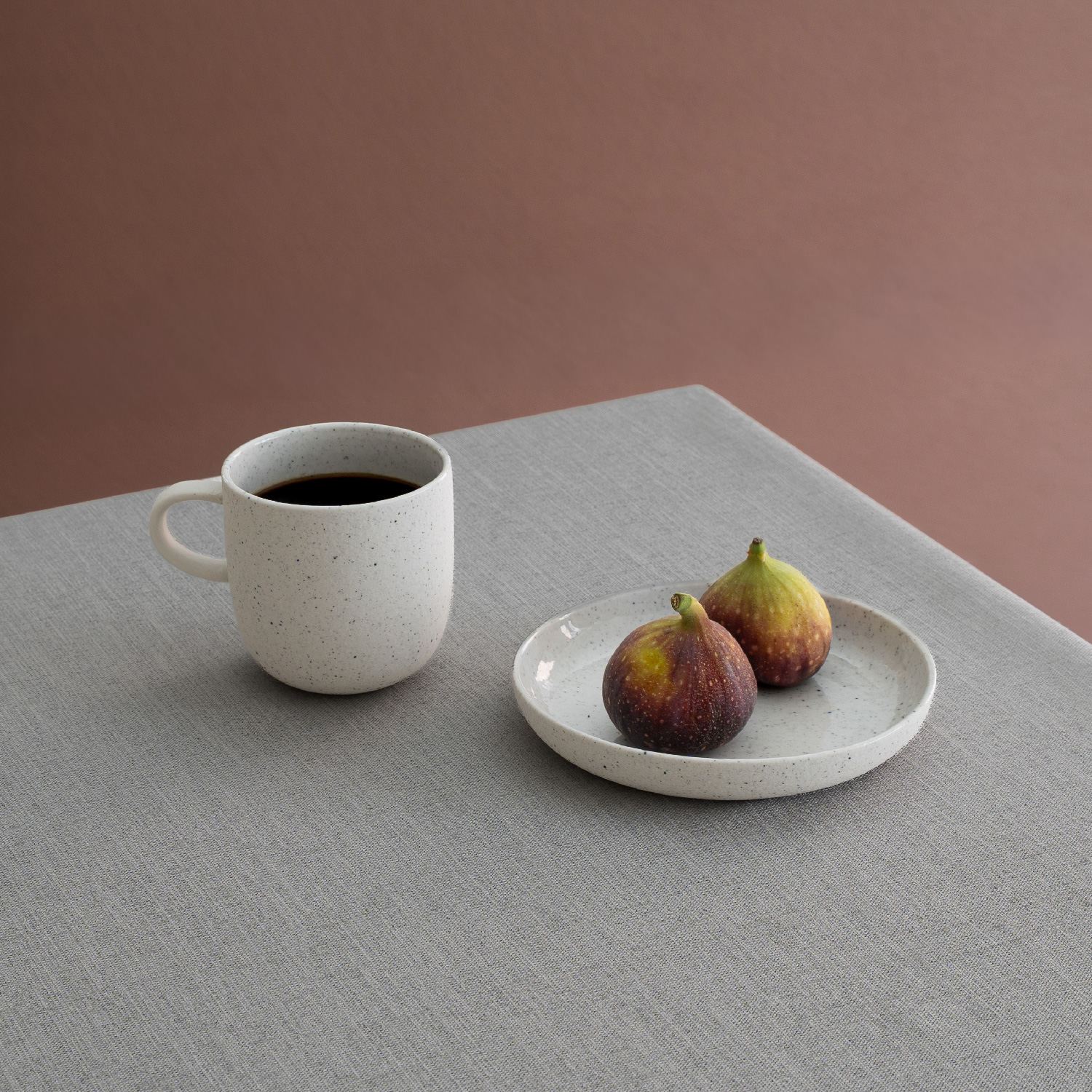
If you were to create heavily decorated or elaborate tableware using this clay, the impression would be entirely different—or rather, decorative elements just wouldn’t complement the natural feel of the clay. The tableware in the GRAIN series has a remarkably soft aesthetic, with a warm, almost charming feel to it. In the end, it brought me to one clear conclusion: “This design was meant for this exact recycled clay.”
Takeuchi
I designed them with soft, gentle curved silhouettes in mind. My goal was to create pieces that fit comfortably in your hand, with a plump roundness that brings a sense of warmth. Thanks to the wet-jiggering craftsman, as well as Tsuchimoto-san and all the craftsmen at Shinzan Kiln Yamatsu, we were able to bring these wonderful items to life. The more you use them, the more you appreciate the rich material texture and feel, making them pieces you’ll want to reach for every single day.
Whether for your daily table or as a thoughtful gift for someone special, the GRAIN series is something I truly hope people will enjoy.
Item information


